God loves you
You are no accident. God knows you and wants a relationship with you.

Flutlicht Deutschland e. V.
Honest answers to questions large and small.
I am the light of the world.
The good news
What this is really about. Step by step, short and direct.
01
You are no accident. God knows you and wants a relationship with you.
02
Our guilt stands between us and God. The world is not the way it should be.
03
On the cross, Jesus takes that guilt upon himself and opens the way back to God.
04
Jesus has risen. Whoever trusts him receives new, eternal life.
05
This invitation is meant for you personally. Do you want to get to know God?
Click through the five points
You are no accident. God knows you and wants a relationship with you.
Our guilt stands between us and God. The world is not the way it should be.
On the cross, Jesus takes that guilt upon himself and opens the way back to God.
Jesus has risen. Whoever trusts him receives new, eternal life.
This invitation is meant for you personally. Do you want to get to know God?
Questions
Questions that come up again and again.
More than a nice teacher — who was this man really, and why does he still divide the world?
More than a nice teacher from Nazareth. More than a character in a novel. Jesus made claims about himself that nobody can simply walk past: he called himself the Son of God. He forgave sins, something that in Jewish understanding only God may do. He promised that everyone who trusts him has eternal life.
C. S. Lewis put it like this: Jesus was either a liar, a madman, or exactly who he claimed to be — God in the flesh. There is no harmless third option (“a good man and teacher”).
Who Jesus really was is decided by his resurrection. The eyewitnesses were willing to die for it, not for an idea, but for something they had seen.
The question “Who is Jesus?” is therefore not an academic one, but a deeply personal one.
When a child dies, a marriage falls apart, a diagnosis arrives — where is God then?
We know the question ourselves.
The Bible does not dodge this question. In the book of Job a man accuses God, without receiving an explanation, but with an encounter instead. The Psalms are full of cries against God. On the cross, Jesus himself called out “My God, why have you forsaken me?”
What the Bible promises is not a world free of pain, but a God who comes right into the suffering. Who does not watch from the outside, but suffers himself, dies himself, rises himself.
That does not make suffering small. But it keeps faith from being a plaster over open wounds, and makes it a hand that goes in with you.
Do the two rule each other out, or do they belong together?
The idea that faith and science rule each other out is fairly recent, and it does not hold up. Many of the greatest scientists were convinced Christians: Newton, Kepler, Maxwell, Mendel. There are countless researchers who believe today as well.
Science asks: how does the world work? Faith asks: why is it here, and what does it mean? Both questions are legitimate. Both answers complement each other, they are not in competition.
The Bible is not a physics textbook. It does not set out to explain how stars come into being, but who made them. Whoever can tell the one from the other lives more calmly, and with a larger picture of reality.
A question everyone asks at some point, and nobody can answer from their own experience.
What we know: near-death accounts, dreams, guesses. What we do not know: everything else.
The Bible says plainly that death is not the end of anything. There is a resurrection, a judgment, a life with God, or without him. Jesus himself raised the dead and rose himself. That is the ground of Christian hope: not wishful thinking, but a historical event with hundreds of eyewitnesses.
What you experience after death depends on what you do with Jesus now. That sounds hard, but it is consistent. Whoever wants to live with God gets that. Whoever wants to live without him gets that too.
Is faith a private matter, or do other people necessarily belong to it?
Being a Christian is not a club membership. You do not become a Christian by joining a church, attending a course or getting a membership card. Being a Christian is a relationship, with Jesus, personally.
But whoever follows that relationship ends up in community anyway. Not because they have to, but because they want to. Faith without other Christians is like a fire made of a single log, it goes out quickly.
So the question is not “do I have to go to church?”, but: where do I find people I can believe alongside? That may be a large congregation, a small house group or two friends at the kitchen table. The form is secondary, the community is not.
If God is alive, why do we notice so little of it? Or are we simply overlooking it?
Yes. Just rarely in the way we expect.
The Bible describes God as someone who has not let go of history. Empires come and go, governments are put in place and removed again, and he stands above it all (Romans 13:1; Daniel 2:21).
Most clearly, though, God acts where people open themselves to him: through his Holy Spirit, who convicts, comforts and changes. And through his church, meaning ordinary people who are there for one another, who share, forgive and pass on what they were given themselves.
Those who look for it usually find it not in the headlines, but close to home.
An old book, a historical source, or more? Why we make it our foundation.
For us the Bible is the foundation. Not one guidebook among many, but the standard by which we measure everything else, ourselves included.
It came into being over centuries, written by very different people, and yet it tells a single story: God is looking for us. Christians believe that God speaks through these texts, and that in them we can see who he is and who we are.
That makes it our benchmark. Where our opinion, our feelings or the spirit of the age point in another direction, it has the last word, not we.
The best way to test that is to read it. Start with Mark’s gospel — a few chapters are enough to begin with.
Israel divides opinion, even among Christians. What does the Bible say about God's plan for this people?
Above the cross stood the words “Jesus of Nazareth, King of the Jews”, in three languages, so that everyone at the time could understand. This shows that God’s relationship with Israel cannot be separated from the person of Jesus. His sacrificial death on the cross and his expected return as judge of this world and of every single person are directly bound up with it.
The Bible says it plainly: Jesus, the Lion of the tribe of Judah (Revelation 5:5), has the power and authority to bring the future of the world and the judgement to completion in Jewish kingship.
Go deeper
Three ways in. Take whichever fits you right now.
These talks are in German.
These are the first five episodes. The series continues on YouTube.
These are the first five episodes. The series continues on YouTube.
Who we are
Our home is the region of Lower Saxony and Saxony-Anhalt. We all have different biographies: some of us have young families, others are single, and for others the children have long since grown up and left home.
Some led a perfectly “normal” life until they came to faith, others, in the midst of their guilt, had a profound and dramatic encounter with our Saviour. Some had always known the God of our fathers, more or less — or he entered their lives through German reunification. Others came here from an entirely different part of the world and a different culture, and for them the foundation of our Christian West became a blessing: Jesus Christ.
We know that we are not perfect. But on the basis of the Bible we reach out to grow in faith, by God's grace. What unites us is the desire and the dedication to make the good news — the gospel — known in our country again. Our association grew out of that concern.
What we do
01
Street outreach, in German and in Arabic.
02
Support for people in need.
03
Live music (Christian rap), creative workshops and encounters for children and teenagers.
Looking back at the history of our country, we are convinced of this: there were three significant works of God, carried out through people who made themselves available, that shaped our country lastingly — in society, education and culture.
1454
The printing of the Bible by Johannes Gutenberg
1517
The Reformation through Martin Luther
1732
The move into world mission through the Moravian Church
We believe that our heavenly Father has richly blessed our country through these particular gifts. At the same time we see a commission in them: to pass on the good news of Jesus Christ.
Germany is our home, and so our country and its people matter to us. We believe that God still meets people today and continues to write his story, in times of joy as much as in times of hardship. That is why we want to be a small part of what God is doing in Germany, by serving him and the people around us in many different ways.
Just as a floodlight brings light into darkness, we want to point to Jesus Christ — the light of the world — and pass on hope, orientation and love.
I am the light of the world. Whoever follows me will never walk in darkness, but will have the light of life.
Faith and history
What does faith in Jesus Christ have to do with Germany? Three figures from music, politics and science each give an answer, in their own way.
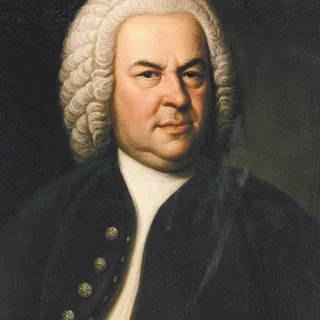
1685–1750, composer
When we think of the greatest musicians in history, names like Beethoven, Mozart, Elvis Presley, the Beatles or Michael Jackson come to mind. Yet the most formative and inspiring musician ever to live among us is, in the judgement of many music experts, producers and performers, Johann Sebastian Bach. The foundation of his work was a healthy fear of God. His masterpieces revolve almost entirely around the life and death of Jesus Christ and his work of redemption.
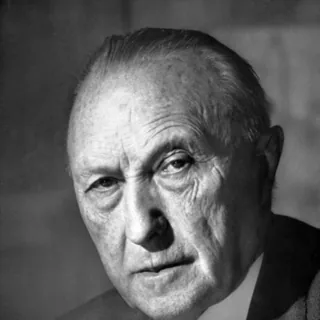
1876–1967, Federal Chancellor
Decades after his death, historians, we Germans and even his political opponents at home and abroad have to admit: Konrad Adenauer's work was honourable and effective like that of no other German politician. This Catholic man, known to those around him as a quiet Christian, knew at every moment that his personal and political life lay in God's hands. His final minutes on his deathbed speak for his faith: as his daughter bent over him weeping and full of grief, he told her, in complete certainty of his faith: “There is nothing to lament.”
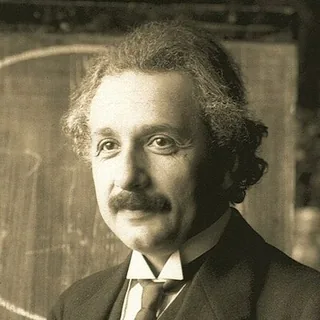
1879–1955, physicist
Nobel laureate Albert Einstein, who came from a Jewish family, testified that no one who reads the Bible can deny the historical existence of Jesus Christ. Yet by all accounts he did not believe in a God with whom one can live in a relationship, who hears our prayers and forgives our guilt through his Son Jesus Christ. We cannot and do not want to pass judgement on Einstein here. But perhaps the saying applies: “A near miss is still a miss.”
Images: Elias Gottlob Haussmann, 1748 (public domain) · Bundesarchiv, B 145 Bild-F078072-0004 / Katherine Young / CC BY-SA 3.0 DE · Ferdinand Schmutzer, 1921 (public domain)
What we believe
The Apostles' Creed. It sums up what Christians have shared since the earliest centuries.
I believe in God, the Father almighty, creator of heaven and earth.
And in Jesus Christ, his only Son, our Lord, who was conceived by the Holy Spirit, born of the Virgin Mary, suffered under Pontius Pilate, was crucified, died and was buried; he descended into the realm of the dead, on the third day he rose again from the dead, he ascended into heaven and is seated at the right hand of God the Father almighty; from there he will come to judge the living and the dead.
I believe in the Holy Spirit, the holy Christian Church, the communion of saints, the forgiveness of sins, the resurrection of the dead and life everlasting.
Amen.
Support
The most important thing you can do for us costs nothing.
We are convinced that nothing we do will last without prayer. If you would like to pray for us, these are the concerns close to our hearts:
That the good news of Jesus Christ reaches the people we meet on the street, at work and in everyday life.
That our country returns to the foundation that shaped it, and that people find faith.
For everyone who carries responsibility at federal, state and local level: for wisdom, honesty and just decisions.
For all who provide protection, order and justice: for safety, strength and clear judgement.
I urge, then, first of all, that petitions, prayers, intercession and thanksgiving be made for all people — for kings and all those in authority, that we may live peaceful and quiet lives in all godliness and holiness.
Contact
Whether it's a question, a doubt or a concern: we read every message and answer personally.