01
Proclamation
Street outreach, in German and in Arabic.

Who we are
Our home is the region of Lower Saxony and Saxony-Anhalt. We all have different biographies: some of us have young families, others are single, and for others the children have long since grown up and left home.
Some led a perfectly “normal” life until they came to faith, others, in the midst of their guilt, had a profound and dramatic encounter with our Saviour. Some had always known the God of our fathers, more or less — or he entered their lives through German reunification. Others came here from an entirely different part of the world and a different culture, and for them the foundation of our Christian West became a blessing: Jesus Christ.
We know that we are not perfect. But on the basis of the Bible we reach out to grow in faith, by God's grace. What unites us is the desire and the dedication to make the good news — the gospel — known in our country again. Our association grew out of that concern.
What we do
01
Street outreach, in German and in Arabic.
02
Support for people in need.
03
Live music (Christian rap), creative workshops and encounters for children and teenagers.
Looking back at the history of our country, we are convinced of this: there were three significant works of God, carried out through people who made themselves available, that shaped our country lastingly — in society, education and culture.
1454
The printing of the Bible by Johannes Gutenberg
1517
The Reformation through Martin Luther
1732
The move into world mission through the Moravian Church
We believe that our heavenly Father has richly blessed our country through these particular gifts. At the same time we see a commission in them: to pass on the good news of Jesus Christ.
Germany is our home, and so our country and its people matter to us. We believe that God still meets people today and continues to write his story, in times of joy as much as in times of hardship. That is why we want to be a small part of what God is doing in Germany, by serving him and the people around us in many different ways.
Just as a floodlight brings light into darkness, we want to point to Jesus Christ — the light of the world — and pass on hope, orientation and love.
I am the light of the world. Whoever follows me will never walk in darkness, but will have the light of life.
Faith and history
What does faith in Jesus Christ have to do with Germany? Three figures from music, politics and science each give an answer, in their own way.
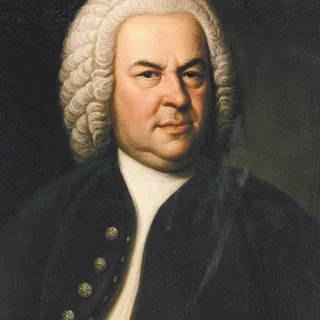
1685–1750, composer
When we think of the greatest musicians in history, names like Beethoven, Mozart, Elvis Presley, the Beatles or Michael Jackson come to mind. Yet the most formative and inspiring musician ever to live among us is, in the judgement of many music experts, producers and performers, Johann Sebastian Bach. The foundation of his work was a healthy fear of God. His masterpieces revolve almost entirely around the life and death of Jesus Christ and his work of redemption.
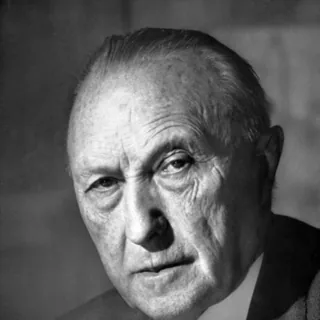
1876–1967, Federal Chancellor
Decades after his death, historians, we Germans and even his political opponents at home and abroad have to admit: Konrad Adenauer's work was honourable and effective like that of no other German politician. This Catholic man, known to those around him as a quiet Christian, knew at every moment that his personal and political life lay in God's hands. His final minutes on his deathbed speak for his faith: as his daughter bent over him weeping and full of grief, he told her, in complete certainty of his faith: “There is nothing to lament.”
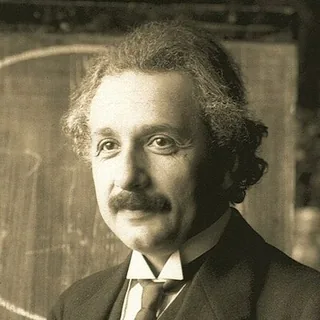
1879–1955, physicist
Nobel laureate Albert Einstein, who came from a Jewish family, testified that no one who reads the Bible can deny the historical existence of Jesus Christ. Yet by all accounts he did not believe in a God with whom one can live in a relationship, who hears our prayers and forgives our guilt through his Son Jesus Christ. We cannot and do not want to pass judgement on Einstein here. But perhaps the saying applies: “A near miss is still a miss.”
Images: Elias Gottlob Haussmann, 1748 (public domain) · Bundesarchiv, B 145 Bild-F078072-0004 / Katherine Young / CC BY-SA 3.0 DE · Ferdinand Schmutzer, 1921 (public domain)